How Do You Prove a Slip and Fall Case Against a Store in Florida?
To understand how to prove a slip and fall case against a Florida store, you often need to look beyond the moment you hit the floor. One of the most important questions is what the store knew, or should have known, about the dangerous condition before your accident happened.
Table of Contents
When I evaluate a slip and fall involving a grocery store, retailer, or other business, I want to know much more than whether there was liquid on the floor.
I want to know where it came from, how long it may have been there, whether employees had already encountered it, whether the area had been inspected, and whether surveillance footage or witnesses can help establish the timeline.
Those details can completely change how a Florida slip and fall claim is evaluated.

Why Is It Difficult to Prove a Slip and Fall Case in Florida?
Florida law generally requires more than showing that you slipped on a dangerous condition inside a business.
When a case involves a transitory foreign substance, such as spilled liquid, the injured person generally needs to establish that the business had actual or constructive knowledge of the condition and should have taken action to remedy it.
That means we may need to answer questions such as:
- Did an employee see the spill?
- Did someone report it?
- Had employees already tried to clean the area?
- How long was the substance on the floor?
- Did similar spills or leaks happen regularly?
- Was the area inspected before the accident?
This is why learning how to prove a slip and fall case often starts with reconstructing what happened before the person fell.
What Does the Store Need to Know About the Dangerous Condition?
There are generally two important concepts in a Florida store slip and fall case: actual knowledge and constructive knowledge.
What Is Actual Knowledge?
Actual knowledge may exist when evidence shows that someone working for the business knew about the dangerous condition.
For example:
- An employee saw the spill
- A customer reported the spill
- An employee attempted to clean the area
- A manager was notified
- Staff placed a warning sign around the condition
Evidence showing that employees were already dealing with liquid in the area can significantly change the liability analysis.
Instead of asking whether the store had any opportunity to know about the hazard, we may now have evidence suggesting employees already knew a problem existed.
What Is Constructive Knowledge?
Constructive knowledge involves circumstances where the store may deny that an employee actually saw the condition, but other evidence suggests the business should have discovered it.
That could include evidence showing:
- The spill existed for an extended period
- Customers had already walked through it
- Shopping carts had rolled through it
- The substance appeared dirty or partially dried
- Similar spills or leaks occurred regularly
- Employees repeatedly passed through the area
This type of evidence can help establish how long a condition existed or whether the problem was foreseeable.
Why Can Evidence From Before the Fall Change the Case?
Imagine a customer walks through a beverage aisle, slips on liquid, falls, and later needs significant treatment for neck and back injuries.
We know three things:
- There was liquid on the floor
- The customer fell
- The customer was seriously injured
Those facts still leave one major question unanswered.
What did the store know about the liquid before the fall?
If nobody knows how the liquid got there, when it appeared, or whether anyone at the store knew about it, proving liability may become more difficult.
Now imagine evidence shows that employees had already been cleaning liquid from that same area before the customer fell.
That changes the story.
There is now evidence connecting store employees to a dangerous condition in that area before the accident occurred.
That type of fact can become extremely important when determining how to prove a slip and fall case.
What Can a Real Florida Slip and Fall Case Teach Us?
A Florida grocery store case provides a good example of why the events before a fall can be so important.
A woman slipped on liquid in a Publix beverage aisle in Kissimmee, Florida, and suffered serious neck and back injuries that eventually required extensive medical treatment and multiple spinal surgeries.
One of the important facts presented was evidence that Publix employees had previously cleaned liquid in the same area before the fall.
The jury ultimately found Publix responsible and awarded approximately $3.97 million.
The size of the verdict may get attention, but from a liability perspective, the more interesting issue is what changed the story.
Evidence about what happened before the accident helped address the question of what the store may have known.
That is the lesson I would take from a case like this.
Serious injuries matter when evaluating damages, but liability still requires evidence explaining why the business may be legally responsible.
Can Surveillance Footage Help Prove a Slip and Fall Case?
Yes, and the most useful footage may not be the footage showing the actual fall.
When investigating a store accident, I want to know what surveillance cameras recorded 10, 20, or 30 minutes earlier.
Footage might show:
- When the spill first appeared
- Another customer causing the spill
- Employees walking through the aisle
- Someone reporting the condition
- Employees attempting to clean the area
- Other customers encountering the same hazard
- Whether inspections were performed
- Whether warning signs were present
Imagine surveillance video shows a bottle breaking 30 minutes before your accident. Several employees then walk through the aisle without addressing the spill.
That information may tell us much more about liability than the five seconds showing you fall.
Surveillance footage can disappear or be overwritten, which is one reason early investigation matters.
I discuss this issue in more detail in my guide to slip and fall accident investigations.
Can Employee Testimony Help Establish What the Store Knew?
Absolutely.
A customer may only know that the floor was wet.
An employee may know why.
For example, an employee might know that:
- A refrigeration unit had been leaking
- Another customer reported the spill
- Someone had already attempted to clean it
- Similar spills occurred regularly
- The area had not been inspected when it should have been
- Employees had discussed the condition before the accident
Those details may never be visible to the person who was injured.
This is why depositions, witness interviews, internal records, and store documentation can become important when determining how to prove a slip and fall case.
What Other Records Can Help Prove What Happened?
Surveillance footage is only one potential source of evidence.
Depending on the circumstances, an investigation may also look for:
- Inspection logs
- Cleaning records
- Incident reports
- Employee schedules
- Maintenance records
- Repair requests
- Prior complaints
- Internal communications
- Witness statements
- Employee testimony
Imagine a store’s records show that a refrigerated display had been leaking repeatedly for several days.
That creates a very different factual situation from a customer unexpectedly spilling a drink seconds before someone falls.
The investigation should look at the whole timeline.
What if Nobody Knows How Long the Spill Was There?
That can make the case more challenging, but other evidence may still help establish timing.
The physical condition of the substance may provide clues.
For example:
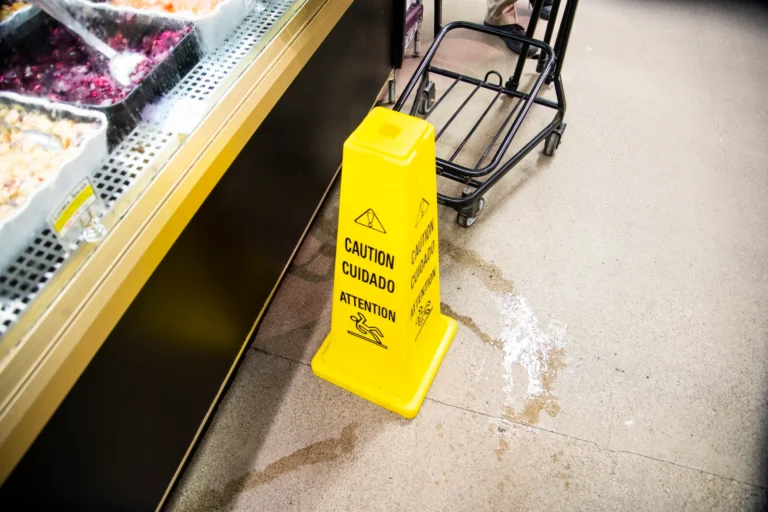
- Dirty footprints through the spill may suggest people had already walked through it
- Shopping cart tracks may indicate the area had been exposed to traffic
- Drying around the edges may provide information about how long the substance had been present
- Witnesses may remember seeing it earlier
- Surveillance footage may establish when it first appeared
No single fact automatically proves liability.
The goal is to put the available evidence together and determine what it tells us about the store’s opportunity to discover and address the hazard.
Why Do Witnesses Matter in a Slip and Fall Case?
The most valuable witness may not be someone who saw you fall.
Someone who saw the dangerous condition before the accident may provide extremely useful information.
Imagine another shopper says:
“I saw that puddle when I came through the aisle 15 minutes ago.”
That person may help establish how long the condition existed.
Another witness may have seen:
- An employee walking near the hazard
- Someone reporting the spill
- An employee cleaning the area
- A leaking cooler
- Another customer nearly falling
- The absence of warning signs
If someone provides information like this after your accident, try to obtain their name and contact information if you are able.
Why Should You Photograph the Scene?
The scene may change within minutes.
Someone may mop the floor. Warning signs may be moved. A leaking product may be removed. A display may be rearranged.
If you are physically able to do so safely, photograph:
- The substance or hazard
- Footprints or cart tracks
- The surrounding aisle
- Nearby displays
- Warning signs or the absence of them
- The general location of the fall
- Your footwear
- Visible injuries
Take both close-up and wider photographs.
Months later, those images may be one of the few ways to show exactly what the area looked like.
For a broader look at the evidence that can strengthen these claims, I also recommend reading What Makes a Slip and Fall Injury Case Stronger in Florida?.
Does a Serious Injury Automatically Create a Strong Slip and Fall Case?
No.
Serious injuries can significantly affect damages, but they do not automatically establish that the store was legally responsible.
There are usually two separate parts of the analysis:
Liability
Who was legally responsible for the dangerous condition?
Damages
What injuries and losses resulted from the accident?
Someone could suffer a devastating injury and still have difficulty proving liability if there is no evidence showing the business knew or should have known about the hazard.
Likewise, strong liability evidence may exist in a case involving relatively minor injuries.
A strong claim generally needs evidence supporting both sides.
How Do Medical Records Fit Into the Case?
Once liability is being investigated, medical records help document what happened to you after the fall.
A medical timeline may show:
- When symptoms began
- When you first sought treatment
- What injuries were diagnosed
- What imaging revealed
- What treatment was recommended
- Whether symptoms continued
- Whether surgery became necessary
- Whether you developed work or activity restrictions
- Whether future treatment is expected
Seek appropriate medical care based on your health and your doctor’s recommendations.
The legal claim should accurately reflect your actual medical experience.
Should You Report a Slip and Fall Before Leaving the Store?
If you are able, yes.
Reporting the incident creates a record that the accident occurred.
You do not need to argue with store employees or explain every detail of a potential legal claim.
Simply report what happened accurately.
If an incident report is created, note who you spoke with and ask how you can obtain information about the report.
This can become important if your symptoms become worse later and the insurance company begins questioning whether the accident occurred as described.
How Quickly Should Slip and Fall Evidence Be Preserved?
As quickly as reasonably possible.
Evidence that may disappear includes:
- Surveillance footage
- The substance itself
- Footprints or cart tracks
- Witness information
- Cleaning logs
- Inspection records
- Employee memories
- Temporary warning signs
- Maintenance information
This is why I do not recommend assuming the business will gather everything necessary for your case.
The business is documenting the incident from its perspective.
You need to think about preserving the information that may help explain what actually happened.
What Questions Should an Attorney Ask When Investigating the Fall?
When determining how to prove a slip and fall case, I would want answers to questions such as:
- What caused the fall?
- Where did the dangerous condition come from?
- How long may it have existed?
- Did employees know about it?
- Had anyone reported it?
- Did similar conditions happen before?
- When was the area last inspected?
- Does surveillance footage exist?
- Are there witnesses?
- Did employees attempt to clean the area?
- What records does the business maintain?
- What injuries and treatment followed?
The goal is to reconstruct the entire sequence of events.
The fall itself may last only seconds. The evidence needed to explain why it happened may stretch much further back.
You can learn more about how I approach these claims through my Miami personal injury practice.
Questions People Commonly Ask About Proving a Slip and Fall Case
Do I have to prove that an employee actually saw the spill?
Not necessarily. Depending on the facts, a claim may also rely on evidence suggesting the condition existed long enough that the business should have discovered it or that the dangerous condition occurred regularly.
Can surveillance footage prove the store knew about the spill?
Potentially. Surveillance may show when the condition appeared, how long it existed, whether employees passed through the area, and whether anyone attempted to address it.
What if nobody saw me fall?
A witness to the exact fall is not always necessary. Photographs, surveillance video, incident reports, physical evidence, medical records, and witnesses who saw the condition beforehand may still be important.
What if the store cleaned everything before I could take pictures?
The investigation may still uncover surveillance footage, witnesses, cleaning records, inspection documents, incident reports, or employee testimony.
Can an employee’s statement make a difference?
Yes. An employee may have information about prior spills, cleanup attempts, recurring leaks, inspections, or other events the injured customer never saw.
What if the store says it had no idea the spill was there?
That does not necessarily end the investigation. The question may become whether other evidence can show that the business should have discovered the condition.
What Is the Most Important Thing to Remember About How to Prove a Slip and Fall Case?
When trying to understand how to prove a slip and fall case, do not focus only on the moment the person hits the ground.
Look backward.
What happened 10 minutes earlier?
What happened 30 minutes earlier?
What did employees see?
Was the area inspected?
Had someone already cleaned the same condition?
Was there surveillance footage?
Did another customer notice the hazard?
Sometimes the evidence that changes a slip and fall case involves something the injured person never saw.
If you were injured in a grocery store, retail store, or other business in Miami, South Florida, or elsewhere in Florida, acting early may help preserve evidence that could become important to your claim.
If you have questions about what happened, you can contact my office for a free consultation. We can review the circumstances of the fall, discuss what evidence may still exist, and help you understand what would be needed to pursue a Florida premises liability claim.